Foreign Quota Condos in Thailand
Thailand is known for its thriving real estate market, and foreign investment
One of the key aspects to understand is the foreign quota law, which directly impacts the ability of non-Thais to purchase condominiums.
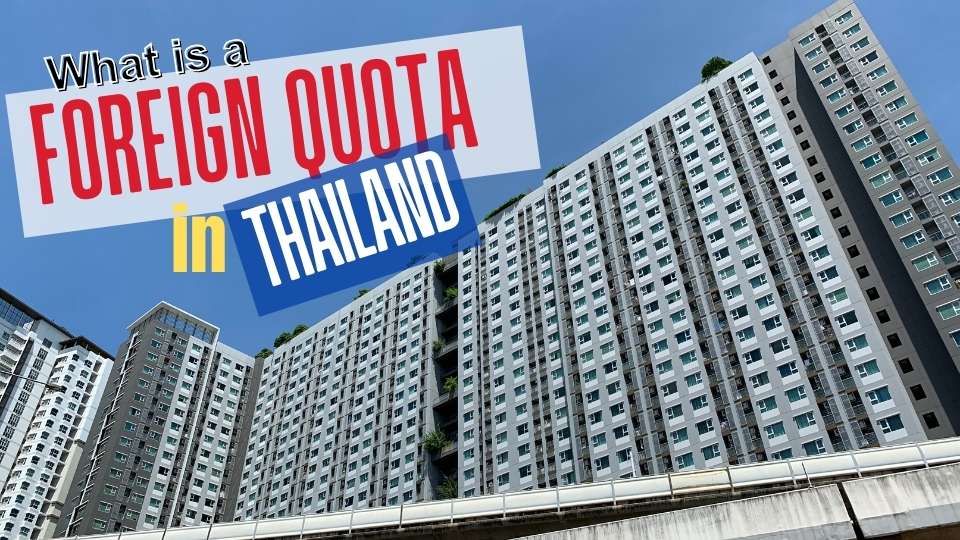
What Is the Foreign Quota Law?
The foreign quota law in Thailand is an integral regulation that governs condominium ownership by non-Thais. As stipulated under the Condominium Act B.E. 2522 (1979), foreigners can legally own up to 49% of the total area of all units in a condominium building. The remaining 51% must be owned by Thai nationals or entities.
This limitation ensures that a majority of the building's ownership remains in Thai hands.
Purpose
The purpose of this law is two-fold:
- Economic Protection: It safeguards the local economy by preventing excessive foreign investment from driving up property prices beyond the reach of local residents.
- Cultural Preservation: It helps maintain the cultural and social fabric of communities by ensuring a balanced mix of foreign and local ownership.
What Is the Ownership?
Legal Framework
In Thailand, ownership of a condominium unit by a foreigner is allowed under the Condominium Act B.E. 2522 (1979), but within the constraints outlined by the foreign quota law.
This legal framework ensures that while foreigners can invest in the Thai property market, there are strict guidelines to be followed.
Criteria for Ownership
To be eligible for ownership under the foreign quota, the following criteria must be met:
- The condominium building must not exceed 49% foreign ownership.
- The foreign buyer must provide proof of funds transferred from overseas for the purchase of the property.
What Are the Payment Requirements?
Bank Transfers
For any property purchase by a foreigner in Thailand, the payment must:
- Be transferred from overseas in foreign currency.
- Be accompanied by a Foreign Exchange Transaction Form (FETF) or a Thor Tor 3 from the bank, depending on the amount.
- Declare the purpose of the transfer as property acquisition.
Currency Regulations
According to the Bank of Thailand, large sums brought into the country must be reported. For transactions exceeding USD 50,000, the foreign buyer must obtain and submit the necessary bank documents to the Land Office when registering the condominium unit.
How to Determine Foreign Quota Status of a Condo
Developer and Land Office
To find out if a condo unit falls within the available foreign quota, buyers can:
- Request a status report from the developer.
- Check with the local Land Office, which keeps records of all foreign-owned units within a condominium building.
- Check with the Juristic Person of the building
Legal Assistance
It's highly advised to hire a legal professional or a reputable real estate agent, like those at RE/MAX Thailand, who can assist with due diligence and provide accurate quota information.
Can a Thai National Hold a Foreign Quota?
Regulatory Insights
No, a Thai national cannot hold a unit under the foreign quota. Foreign quotas are specifically designated for foreign ownership.
Any unit sold to a Thai national does not count towards this quota limit and is instead part of the 51% reserved for Thai citizens.
When Will I Need to Use a Quota Letter?
Land Office Requirement
A quota letter, or foreign quota certificate, is essential when registering a condominium unit purchase at the Land Office.
This letter certifies that the unit being purchased falls within the allowable 49% foreign ownership limit. Learn more abour Quota Letter
Documentation
The quota letter is usually provided by the condominium's juristic person office or property developer and must be presented along with the other requisite documents during the registration process.
Conditions for Land Office to Register a Condo as a Foreign Quota
The Land Office will register a condominium unit under a foreign quota if the following conditions are met:
- Submission of a valid foreign quota letter.
- Proof of funds transfer from abroad.
- Compliance with the required legal documentation and ownership criteria.
Is the Foreign Quota Attached to the Property?
Quota Transfer
The foreign quota is not attached to the property itself but to the amount of foreign ownership within the condominium building. When a foreigner sells their unit, it can be sold either to another foreigner (thus remaining within the foreign quota) or to a Thai national (which then reduces the foreign ownership percentage).
Investment Flexibility
This regulation provides flexibility for foreign investors, allowing them to sell their units without affecting the overall foreign quota of the building.
Frequently Asked Questions About Foreign Quota
1. Can a foreigner buy multiple condo units under the foreign quota?
Yes, a foreigner can purchase multiple units as long as the combined ownership within the building does not exceed the 49% foreign quota.
2. What happens if foreign ownership in a condo building exceeds 49%?
If foreign ownership exceeds the 49% limit, the Land Office will refuse to register any further sales to foreigners until the ratio complies with the legal requirement.
3. Are there any taxes or additional fees involved in owning a condo in Thailand?
Yes, buyers should be aware of transfer fees (usually split between buyer and seller), specific business tax (for sellers), and income tax. Annual common area maintenance fees and a sinking fund are also typically required.
4. Can foreigners get financing for condos in Thailand?
While most Thai banks do not offer mortgages to foreign buyers, some international banks with branches in Thailand do provide financial services. Alternatively, developer financing might also be available.
5. Is it necessary to have a Thai bank account to purchase a condo?
Although it is not mandatory, having a Thai bank account can simplify transactions, especially for payment of maintenance fees and utility bills.
6. Does It Apply Only to Condominiums?
Yes, the foreign quota law specifically applies to the ownership of condominium units.
7. Can a Foreigner Own Land in Thailand?
No, foreigners cannot own land in Thailand outright but can lease it for up to 30 years, with an option to renew.
Work with a Professional Agent
A professional RE/MAX agent in Thailand can provide invaluable assistance and guide. They have the expertise, local market knowledge, and experience to help you find the right property, ensure the due diligence, and guide you through the legal and bureaucratic processes efficiently.
To conclude, understanding the foreign quota laws and regulations is crucial for any foreign investor looking to purchase a condominium in Thailand. By knowing the ownership limits, payment requirements, and necessary documentation, you can make informed decisions and avoid potential pitfalls.
For more insightful information and to get started on your property journey in Thailand, connect with a RE/MAX Thailand agent today. Enjoy seamless and professional guidance throughout your property acquisition process. Remember, there's always more to discover in the dynamic Thai property market, and our experts are here to help you every step of the way.
Real Estate Definitions
“Time is of the essence”
Agent
Agreement of sale
Alienation
Alienation clause
Amendments
Amenities
Appraisal
Appreciation
Arbitration
Assessment
Balloon payment
Beneficiary
Breach of contract
Broker
Broker Agent (Salesperson)
Brokerage Owner
Building restrictions
Business plan
Capital Gain
Capital investment
Capitalization
Capitalization Rate
Cash flow
Closing
Closing or Completion
CMA
Code of Ethics
Collateral
Commercial Property
Commercial Zone
Commission
Comparable (Comps, Sales Comps)
Comparable Market Analysis
Contingencies
SaleContract
Contract for deed
Cost approach
Counteroffer
Debt
Deed
Default
Deposit or Down Payment
Down Payment
Earnest Money
Endorsement
Equity
Escrow
Exclusive Listing Agreement
Exclusive right to sell listing
Exclusive-agency listing
Execution
Executor
Expenses
Fixture
For Sale By Agent
For Sale By Owner (FSBO)
Foreclosure
Foreign Quota
Franchise
Fraud
Freehold estate
Future interest
Grantee
Grantor
Heir
Highest and best use
Identity
Income approach
Independent contractor
Industrial property
Inspection
Instalment Contract
Installment sale
Interest-in-real-estate
Joint tenancy
Joint venture
Judgment
Judgment clause
Land
Lease
Leasehold estate
Lessee
Lessor
Lessor, Landlord, Property Owner
Letter of Intent (LOI)
Lien
Listing
Listing Agreement
Loan
Management Agreement
Market price
Market value
Market/data approach
Memorandum of Understanding (MOU)
Mortgage
Mortgage lien
Multi-Family
Multiple Listing Service (MLS)
Negligence
Net Income
Net lease
Net operating income
Non Disclosure Agreement (NDA)
Notary public
Novation
Open listing
Open Listing Agreement
Option
Ownership
Partnership
Power of attorney
Preliminary Deposit
Premises
Prepayment clause
Prepayment penalty
Priority
Property
Property Investment
Property management
Property Tax
Quota Letter
“Ready, willing, and able”
Real estate
Real Estate Broker
Real Estate Property
Real Estate Purchase/Sale Agreement
REALTOR®
Rent
Rent schedule
Replacement cost
Resale
Residential
Rights Over Leasehold Asset
Sales contract
Salesperson
Short sale / Fire Sale
Single Family
Specific Business Tax
Spouse Consent
Stamp Duty
Subletting
Substitution
Survey
Tenant
Termination (lease)
Termination of listing
The original amount
The Terms “Agent” and “Broker”
Title
Title Deed
Title Insurance
Transfer Fee
Value
Viewing Form
Withholding Tax
Yield
Zoning